

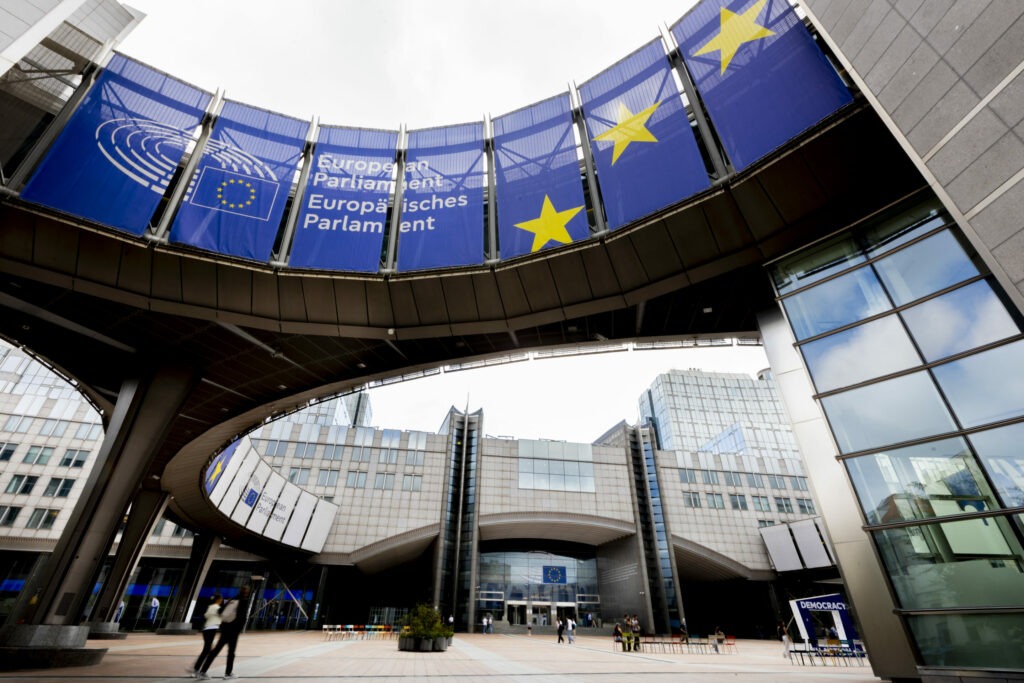
Greenpeace activists staged a protest near the European Parliament in Brussels on Wednesday, October 14, calling on European leaders to reduce the continent’s dependence on gas. The demonstration took place ahead of a European Council summit scheduled for Thursday and Friday, where leaders are expected to discuss competitiveness, energy prices and the long-term direction of Europe’s energy policy.
The action took place around Place du Luxembourg in Ixelles, near the European Parliament. The Brussels Times reported that about ten activists were detained during a peaceful demonstration involving Greenpeace and Extinction Rebellion. At the same time, several climbers positioned themselves near the Parliament entrance, with at least four people reportedly climbing to a height of around ten metres. No clashes were reported in the account.
Greenpeace said the protest was intended to draw attention to the financial and environmental costs of relying on fossil fuels. Activists displayed banners warning about the consequences of burning gas and used a visual effect designed to resemble smoke. The group argued that continued dependence on gas leaves households exposed to price increases and keeps Europe tied to energy sources that contribute to climate change.
Energy prices have become a concern for households and businesses across Europe. When gas prices rise, the effects can spread to electricity costs, heating bills, transport and the production of goods. Lower-income households may feel the pressure most sharply because energy takes up a larger share of their budgets. Companies with high energy needs can also face higher operating costs, which may affect prices, investment and employment.
The protest came as EU leaders prepared to discuss measures to ease the impact of energy costs on citizens and businesses. Governments face a difficult choice between offering immediate relief and making longer-term changes to the energy system. Temporary support can help households manage sudden price rises, but it may be expensive and does not necessarily reduce dependence on imported fuels. Investment in renewable energy, efficiency and stronger electricity networks can take time but may improve resilience.
Greenpeace has called for a faster shift away from fossil fuels. Environmental groups argue that reducing gas use would help limit emissions and protect people from volatile international markets. Critics of a rapid transition, however, point to the need for reliable energy supplies and the challenges of replacing existing infrastructure. Policymakers must therefore consider the pace of change, the cost of investment and how to maintain dependable power during the transition.
The protest also highlights the role of public pressure in European policymaking. Demonstrations near EU institutions can bring climate and energy concerns into the public debate just before major meetings. While such actions do not determine the outcome of a summit, they can influence which issues receive attention and how leaders explain their decisions.
The coming summit will provide an opportunity for governments to discuss both immediate price relief and the future energy mix. The central question is whether Europe can protect households from high costs while reducing the risks associated with fossil fuels. Greenpeace’s action is intended to keep that issue visible as leaders consider their next steps.

