

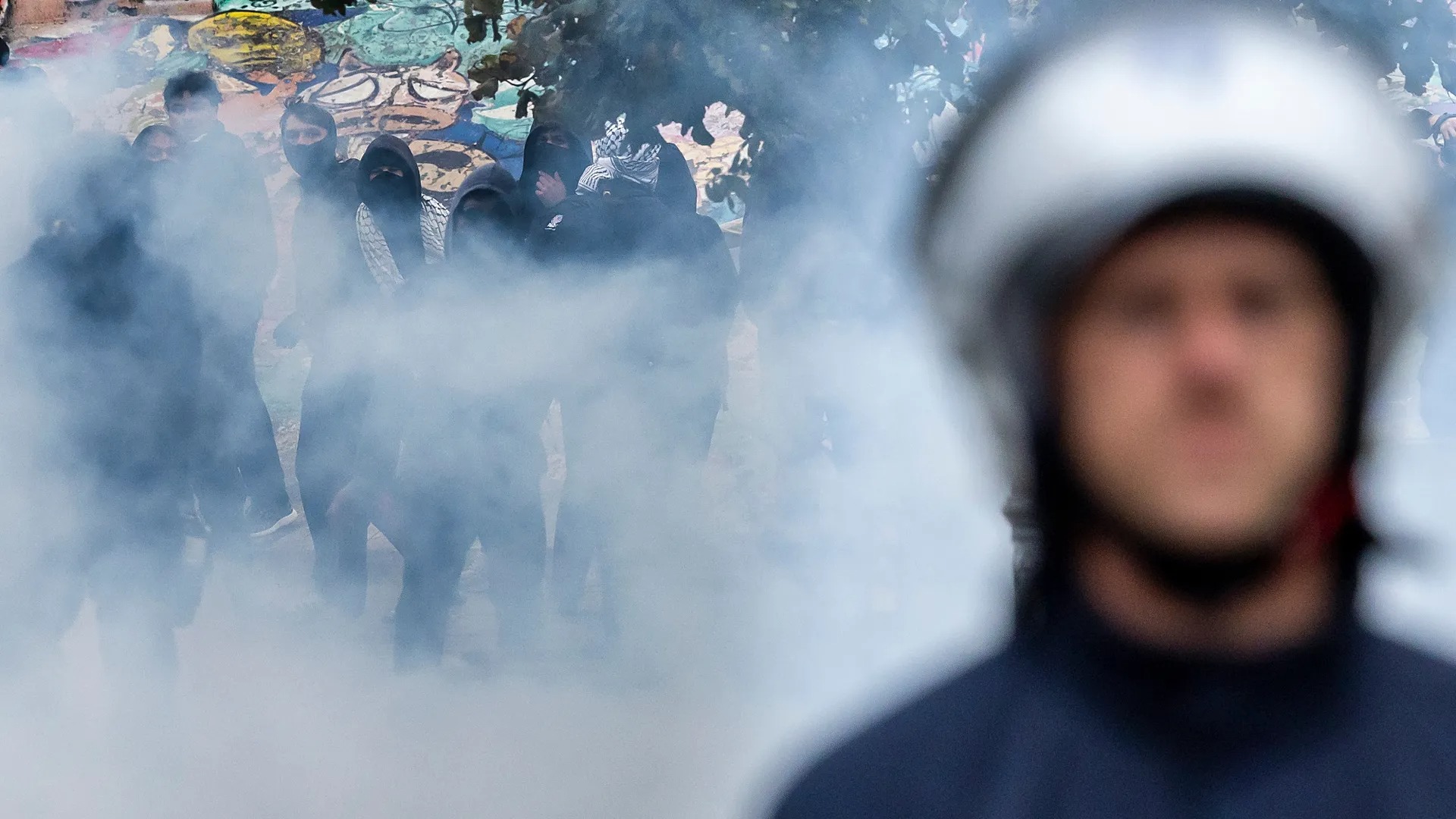
Belgian police arrested ten people, including nine minors, following clashes near Brussels-Midi railway station on Monday, October 12. The incident was reported by Euronews in an update published on October 13, 2026. The unrest took place alongside a national strike and a gathering involving young people, adding to tensions around education policy, government spending and the cost of living.
Hundreds of young people were reportedly present as the situation escalated near the station and surrounding streets. Police said officers were targeted with stones and fireworks. Authorities used tear gas and water cannon as groups moved through areas around Place Bara and the Cureghem neighbourhood. The Clemenceau metro station was temporarily closed, while a car, scooters and street furniture were set on fire.
The clashes occurred against a wider background of protests over government plans to reduce spending. Students have been demonstrating against proposed savings affecting French-speaking education, while trade unions oppose a broader programme of budget cuts. Protesters say reductions could place more pressure on schools and public services at a time when many households are already concerned about rising living costs.
The main political debate centres on how Belgium should manage its public finances without placing too much pressure on workers, students and families. Government supporters argue that spending changes are needed to control debt and make public finances more sustainable. Critics, however, warn that cuts can weaken services and make education less accessible, especially for people who already face financial difficulties.
The violence near Brussels-Midi also raises concerns about how peaceful demonstrations can be separated from disorder. Large marches can attract many people with different aims, and clashes involving a small group can quickly disrupt transport and affect nearby residents. Police must respond to immediate safety risks, while organisers and public officials face pressure to keep demonstrations peaceful and protect the rights of people who gather to express their views.
The incident followed other student protests in Belgium, including unrest in Liège. Authorities have reported numerous arrests since the demonstrations began. The continuing protests suggest that disagreement over education spending and austerity measures is not limited to one city or one day.
As investigations continue, the arrests may lead to legal proceedings and further public debate about protest safety. Local residents and commuters may also face disruption if demonstrations continue around major transport hubs. The situation highlights the difficulty of balancing public order with the right to protest.
For Belgian leaders, the challenge is not only to respond to disorder but also to address the policy concerns driving demonstrations. Clear communication about education funding, spending plans and the likely effects on students could help reduce uncertainty. Any lasting response will need to consider both public safety and the concerns of communities affected by budget decisions.

