

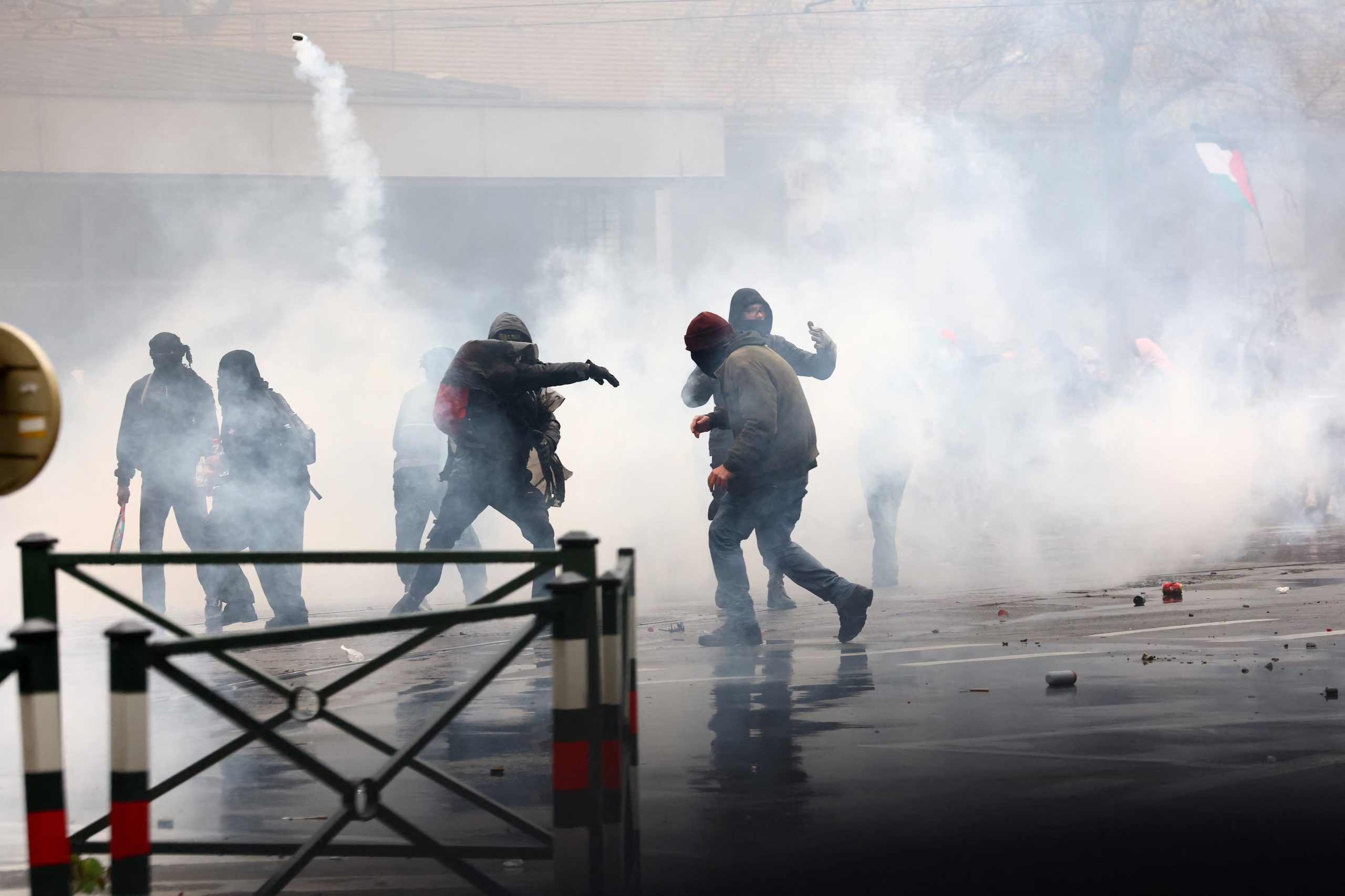
Brussels witnessed a major protest against government budget cuts as workers, students and trade union members gathered in the Belgian capital. The demonstration reflected growing concern about living costs, public services and changes to social support. Many participants argued that ordinary people should not carry the main burden of efforts to reduce public spending. The protest also showed how economic decisions can bring together groups with different needs but similar worries about their future.
The main march included thousands of people who opposed planned changes to public spending. Teachers, students and workers joined the action, while some demonstrators raised concerns about the cost of education and access to social support. The demonstration was largely peaceful, but a smaller group of masked protesters clashed with police. Officers used tear gas and other crowd-control measures after objects were thrown and fires were reported in parts of the city. Authorities said the violent actions were separate from the main union-led gathering.
The dispute comes as Belgium faces pressure to control its public finances. Government leaders argue that spending changes are needed to deal with the country’s debt and budget problems. Protesters, however, fear that cuts could weaken services and leave low-income families with fewer ways to manage rising expenses. Education workers also raised concerns about school conditions and resources. The demonstration highlighted the difficult balance between reducing public debt and protecting people who depend on public services. Further debate is expected as the government prepares its budget decisions.

