

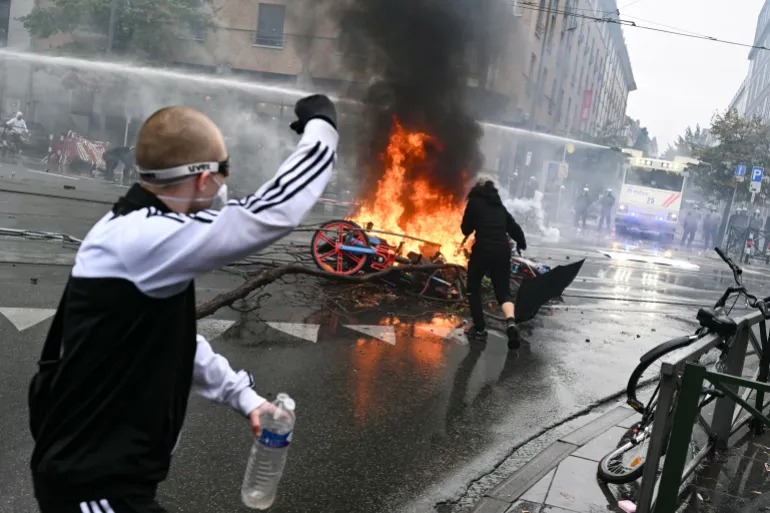
Clashes broke out near Brussels Central Station on Friday as thousands of people joined a protest against the federal government’s austerity plans. The rally was organised by the country’s socialist trade union. While the main march remained peaceful, smaller groups clashed with police before and after the event.
Some protesters threw wooden beams, glass bottles and rubbish bins at officers, according to reports from the scene. Police sent large numbers of officers to areas around the station. They also checked groups of young people who were not wearing trade union colours.
Police said the main union rally passed without major trouble. However, they blamed separate groups for serious incidents linked to the wider protests. Officers said those involved in the violence were not connected to the main march.
Riot police used tear gas, water cannon and baton charges to disperse people involved in the clashes. Fires were also set in parts of the city, adding to the tension during the morning.
Rosie Birchard, reporting from Brussels, described scenes of damage and an acrid smell caused by burning materials and tear gas. She said police and emergency teams had arrived to clear the streets and restore order, but trouble started again after some areas had been cleared.
The situation remained tense as the day continued. Birchard warned that street violence could grow worse in the evening, based on the pattern of earlier protests.
The demonstration was called in response to budget cuts and other spending measures planned by the federal government. Trade unions have opposed the plans, arguing against steps that they say could affect workers and public services.
Thousands of people gathered to show their opposition. The rally brought attention to wider concerns about government spending, jobs and the cost of living. Yet the clashes involving smaller groups shifted attention from the main message of the march.
Young people also took part in the unrest. Some students said they had been inspired by school protests in France and wanted to raise concerns about their own education. They felt that officials were not listening to their views, Birchard reported.
Their presence added another issue to a protest already focused on government policy. While trade unions led the main rally, some young people used the gathering to express wider anger and demand more attention from those in power.
The violence in Brussels followed a tense week in the Belgian city of Liege. Authorities there had banned gatherings after students clashed with police and shops were vandalised.
More than 200 people were arrested in Liege, and dozens of police officers were injured during the unrest. The events raised fresh concerns about public order as protests spread and anger grew among some groups.
The situation in both cities shows the challenge facing authorities as they try to balance the right to protest with public safety. Large demonstrations can bring many people together to express their views, but clashes can put protesters, police and nearby residents at risk.
In Brussels, the main union rally and the violence by smaller groups remained distinct parts of Friday’s events. Police stressed that those who caused disorder were not linked to the official march.
The federal government’s budget plans remain a source of dispute. Trade unions and other groups are expected to keep pressing their concerns as the debate over public spending continues.
For now, the clashes have added to tensions in Belgium after days of unrest in Liege. Police and emergency teams have worked to clear damaged areas and respond to fresh incidents. The full impact of Friday’s violence remained unclear as the protests continued.

