

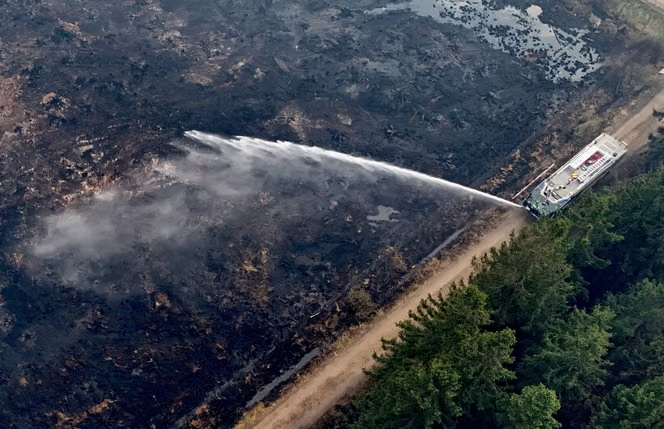
Belgium is dealing with the damage left by its largest wildfire in more than a century. The High Fens wildfire burned about 3,000 hectares of land in eastern Belgium. The blaze began on 14 August in the High Fens nature reserve, near the German border. It spread fast through dry peat, heath and pine trees.
The fire was brought under control on 20 August after seven days of hard work. Local officials said the blaze should not spread again unless there is a major change in the weather or another unexpected event. Still, the danger has not fully gone. Hot spots remain in the burned area, and crews must keep checking the ground for new flare ups.
The scale of the damage made the fire a major national emergency. About 3,000 hectares were affected. That is a huge area for Belgium, a country that has not often faced fires of this size. The High Fens is also a special natural area. Its peat soil can hold heat below the surface. This makes the work harder even after the main flames are gone.
Firefighters faced many problems during the response. Much of the land is wet, rough and hard to reach. Heavy vehicles can sink into the ground. Smoke also made it hard for crews and aircraft to see the fire. Strong winds changed the direction of the flames at times.
The response brought together teams from Belgium and other European countries. Firefighters, soldiers, police officers, Civil Protection teams and local farmers all helped. Aircraft and helicopters were also used to drop water on areas that were hard to reach from the ground.
The fire also raised fears on the German side of the border. At one point, flames came close to the border. Some people near Monschau were moved from their homes as a safety step. The fire later stopped moving toward Germany, helped by rain, higher humidity and calmer winds.
The weather played a key role throughout the crisis. Rain helped slow the fire, but storms also made work more difficult. Fallen trees, mud and poor visibility limited access to parts of the reserve. On 20 August, officials said work was still needed to deal with hot areas inside the burned zone.
The fire has also raised fresh questions about Belgium’s risk of wildfires. Research shared during the crisis showed that Belgium had recorded 234 wildfires by 13 August this year. That was more than twice the number recorded in the same period of the previous year. Researchers have warned that hotter and drier weather may increase the risk of major fires.
Experts say the High Fens fire should be seen as a warning. Belgium has a wetter climate than many southern European nations. Yet long periods of heat and dry weather can still make forests and peatlands very dry. Once a fire starts, peat can allow heat to remain below the ground for a long time.
The cause of the High Fens fire remains under investigation. Authorities have not announced a final explanation for how it began. For now, the main focus is on safety and recovery.
The next phase may take longer than the firefighting itself. Crews must check the burned land, cool hot spots and watch for fresh smoke. Access to parts of the reserve has also remained restricted while the area is checked for hazards.
The High Fens wildfire has left a deep scar on one of Belgium’s most valued natural areas. It has also shown how quickly dry weather can turn a local fire into a large crisis. For firefighters, the immediate battle may be over. But for the land, the work of recovery is only beginning.

