

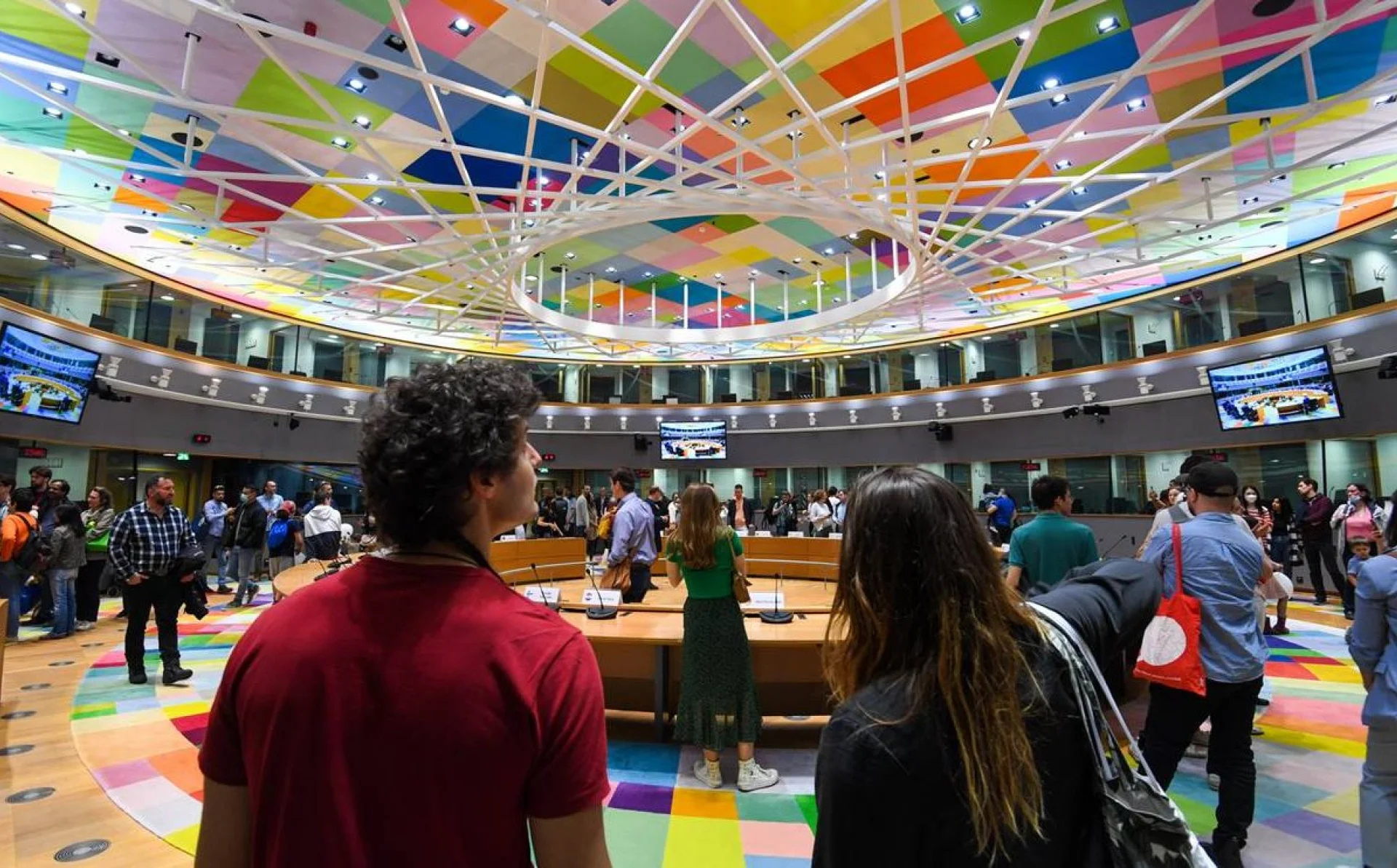
The European Council and the Council of the European Union will offer free public visits to their buildings in Brussels starting in September, giving visitors a chance to learn more about how key European institutions operate.
The initiative allows residents, students, tourists, and organized groups to explore the locations where European leaders meet to discuss major political, economic, and social issues affecting the continent.
Visitors will be able to discover the Council’s facilities through several different options, including self-guided visits, information sessions, and guided tours led by Council staff.
The program aims to improve public understanding of the European Union’s decision-making process and provide a closer look at the institutions that help shape policies across Europe.
One of the available options is a self-guided visit. Guests can explore the visitors’ center and public areas of the Council buildings at their own pace.
These spaces provide information about the role of the European Council and the Council of the European Union, along with details about their work and responsibilities.
Groups can also request specialized information sessions. These sessions are designed for groups of at least 20 participants and provide an opportunity to hear directly from Council officials.
During the sessions, experts explain how the institution functions and discuss the work carried out by member states within the European Union framework.
Officials also share insights into daily operations and the experience of working within one of Europe’s most important political institutions.
The information sessions are available in all 24 official languages of the European Union, making them accessible to visitors from across the bloc.
Participants must be at least 15 years old to attend these educational presentations.
Another popular option is the guided building tour, which takes place every Friday morning. These tours are led by Council staff members and provide visitors with access to key areas of the Council complex.
The guided experience offers a closer look at the architecture and design of the Justus Lipsius and Europa buildings, two of the most recognizable structures used by European leaders.
Visitors will learn about the history, purpose, and architectural features of the buildings while gaining a better understanding of how major meetings are organized.
A highlight of the tour is the visit to the distinctive lantern-shaped structure inside the Europa building. This area has become one of the most recognizable architectural features associated with the European Council.
The guided tours are free and last approximately one hour. Tours are currently available in English and French.
Officials say the program is suitable for anyone aged 15 and older who wants to learn more about European governance and institutional cooperation.
All visits require advance booking. Organizers have emphasized that reservations must be made before arrival to ensure proper planning and visitor management.
Groups must submit their booking requests online at least 20 working days before their planned visit date.
The Council has also announced that group visits will not be available during August. Public visits and guided tours will resume under the new schedule beginning in September.
The initiative reflects ongoing efforts by European institutions to increase transparency and public engagement.
By opening their doors to visitors, the European Council and the Council of the European Union hope to help people better understand how decisions are made and how member states work together on shared priorities.
The free tours and educational sessions offer a unique opportunity to visit important European institutions, explore award-winning architecture, and gain firsthand insight into the processes that help shape the future of Europe.

