

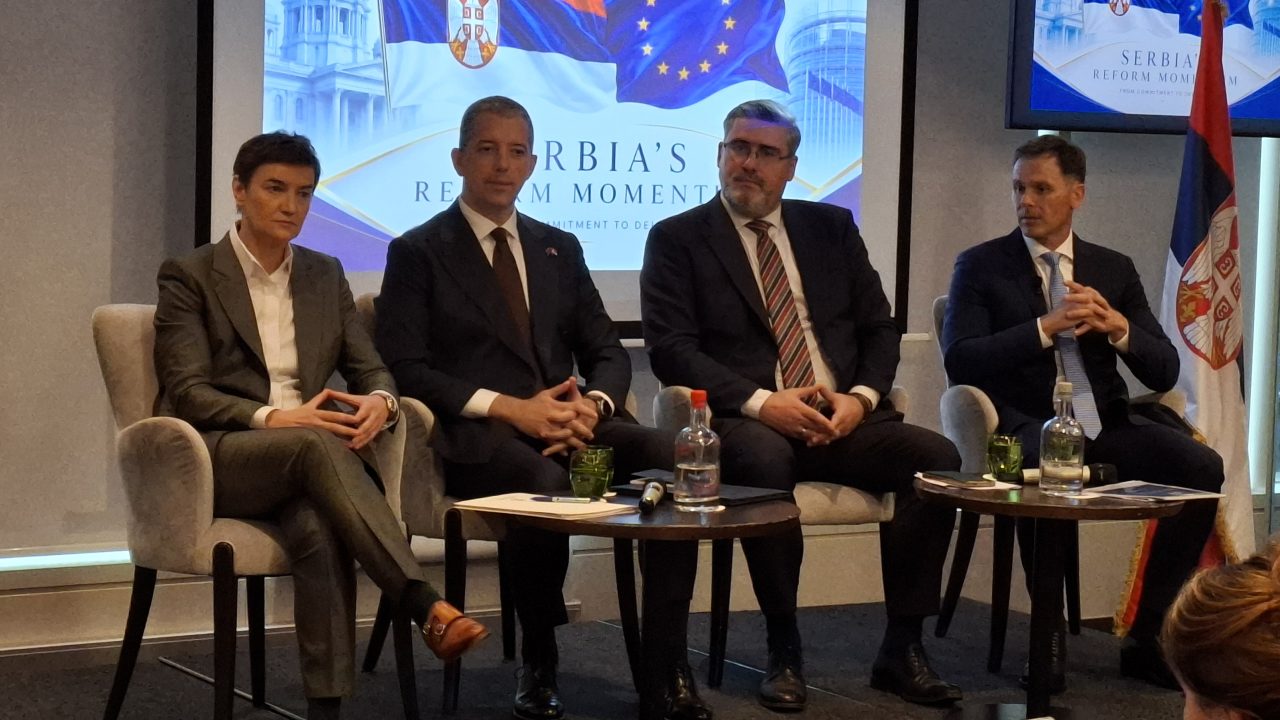
Serbia has renewed its call to move forward with its European Union membership process after senior government officials presented the country’s latest reform progress during a high-level meeting in Brussels.
The Serbian delegation said the country has completed key reforms and is ready for the opening of Cluster 3, an important stage in the EU accession negotiations that focuses on economic competitiveness, social policy, education, digital development, taxation, customs, and industrial policy.
Ana Brnabić led the discussions by highlighting Serbia’s reform efforts and expressing disappointment over the delay in opening Cluster 3.
Brnabić said Serbia has been technically prepared to begin negotiations under Cluster 3 since 2021. She explained that the government has changed its approach by focusing on implementing reforms instead of only preparing plans.
According to Brnabić, Serbia completed the required benchmarks for the remaining chapters in Cluster 3 in December 2024. However, the process was delayed as the European Union requested further progress on the rule of law and the normalization of relations with Kosovo.
She said many of Serbia’s achievements during 2026 resulted from practical reforms that have already been put into action.
Brnabić also noted that Serbia’s National Assembly approved 23 laws during 2026 to support the country’s EU membership process. Fourteen of those laws relate directly to adopting EU legislation and implementing the Growth Plan agreed with European partners.
She added that four new laws strengthen the rule of law, including measures linked to recommendations from the Organization for Security and Co-operation in Europe to improve Serbia’s electoral system.
Another five laws were prepared with assistance from the Venice Commission to address concerns raised by the European Commission and EU member states.
Brnabić said Serbia is also working with the OSCE on additional legislation aimed at strengthening anti-corruption measures. She described the reforms as the most comprehensive effort undertaken by Serbia in its European integration process.
Marko Đurić told reporters that opening new negotiation chapters would encourage both the government and the public to continue implementing reforms.
He said Serbia’s progress would also strengthen stability in southeastern Europe, particularly at a time of changing geopolitical conditions.
When asked about the reasons for the continued delay, Đurić said the final decision depends on all 27 EU member states, each with its own priorities. However, he expressed hope that progress could be made in the near future.
Siniša Mali said Serbia will continue investing in infrastructure, healthcare, environmental projects, and economic development regardless of the pace of EU negotiations.
He added that the government remains committed to improving living standards and aligning Serbia’s economy with European standards.
Foreign policy was also discussed during the Brussels meeting. Brnabić said Serbia has supported European partners by voting to condemn Russia’s military actions in Ukraine and currently aligns with about 63 percent of the EU’s Common Foreign and Security Policy.
She noted that Serbia continues to respect Ukraine’s territorial integrity while maintaining its own national interests regarding Kosovo. According to Brnabić, Serbia does not view those positions as contradictory.
Officials also suggested that greater progress toward EU membership could encourage Serbia to move toward even closer foreign policy alignment with the European Union in the future.
The Serbian delegation concluded its visit by stressing that the country has delivered concrete reforms and remains committed to joining the European Union. Officials said they now hope EU institutions will recognize those efforts by opening Cluster 3 and allowing Serbia to move to the next stage of its long-standing accession process.

