

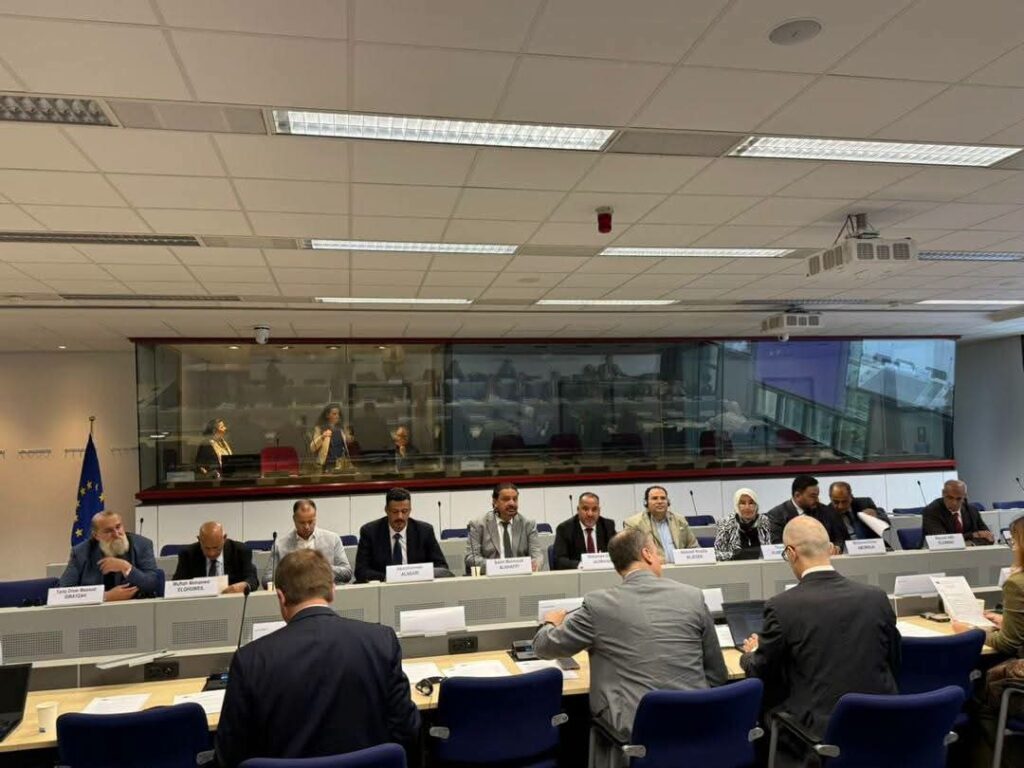
Libya’s Department for Combating Illegal Migration presented its latest migration management efforts during a high-level meeting in Brussels attended by representatives from the European Union, the United Nations, and several international organizations.
The meeting focused on strengthening cooperation to address illegal migration, improve humanitarian support for migrants, and increase efforts against migrant smuggling and human trafficking networks.
The Libyan delegation was led by Major General Salah Mahmoud Al-Khififi, head of the Department for Combating Illegal Migration, along with Major General Abdulrahman Al-Ansari, director of the department’s southern branches. The officials attended the meeting under directives issued by Libya’s military leadership.
During the discussions, delegates reviewed Libya’s current migration policies and the challenges facing the country as a major transit route for migrants seeking to reach Europe. Participants also examined ways to improve border security, expand voluntary return programs, and strengthen cooperation between Libya and international partners.
Major General Al-Khififi said the department has introduced an upgraded system for handling migrants. According to him, the process includes the legal apprehension of migrants, their transfer to designated shelters, and the provision of healthcare and humanitarian assistance while legal procedures are completed.
He explained that migrants receive support until they are either voluntarily returned to their home countries or deported according to Libyan law and relevant procedures.
The Libyan delegation also presented operational results from different parts of the country. Officials highlighted efforts to dismantle migrant smuggling groups, supervise detention and shelter facilities, strengthen border control operations, and coordinate deportation procedures.
The delegation said cooperation with international organizations has helped improve voluntary return programs for migrants who choose to return to their countries of origin.
Al-Khififi described Libya as one of the main countries managing migration flows across North Africa. He said the country’s geographic location places significant pressure on its security agencies, which continue working to prevent illegal border crossings and combat organized criminal networks involved in migrant smuggling.
He called for greater international support to help Libya strengthen border security, improve migration management, and increase cooperation against cross-border crime. He said stronger partnerships would benefit both Libya and neighboring regions affected by irregular migration.
Representatives at the meeting also discussed humanitarian issues linked to migration. International organizations continue to emphasize the importance of protecting migrants’ rights, improving living conditions, and ensuring access to healthcare and basic services while migration cases are processed.
Migration remains one of the most important issues affecting cooperation between Libya, European countries, and international agencies. Libya continues to serve as a major transit point for migrants traveling from sub-Saharan Africa toward Europe through the Mediterranean Sea.
The Brussels meeting provided an opportunity for governments and international organizations to exchange information, review current policies, and identify areas for closer cooperation in addressing migration challenges.
At the conclusion of the meeting, Al-Khififi reaffirmed the department’s commitment to carrying out its responsibilities under the guidance of Libya’s military leadership. He said the agency would continue working to strengthen national security while respecting the dignity of migrants and expanding cooperation with international partners.
Officials expressed hope that continued coordination between Libya, the European Union, the United Nations, and humanitarian organizations would improve migration management, reduce illegal trafficking activities, and support long-term regional stability.

