

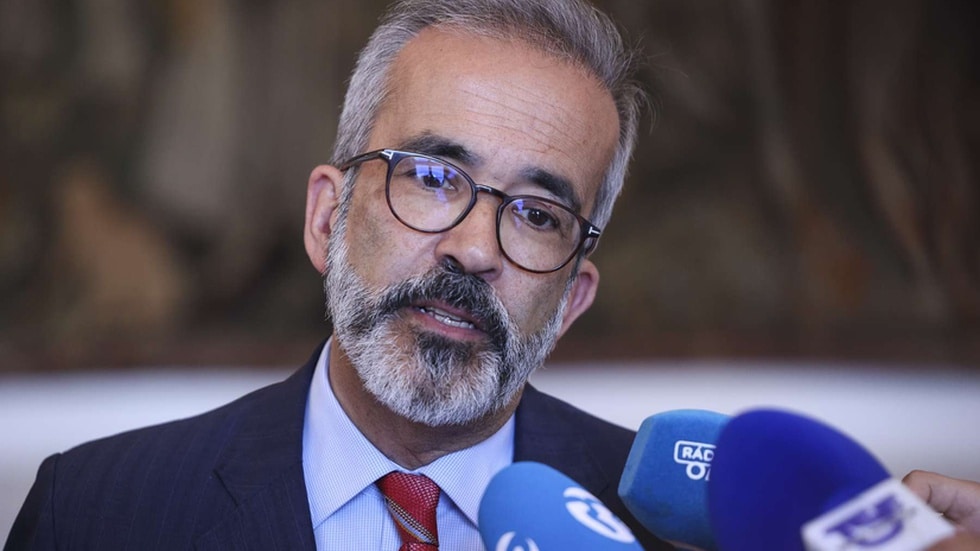
Portugal has supported a new European Union plan to block Russian fighters linked to the war in Ukraine from entering EU countries. The position was confirmed by Portugal’s Foreign Affairs Minister Paulo Rangel during a meeting of EU foreign ministers in Luxembourg. The proposal is part of a wider sanctions package aimed at increasing pressure on Russia over the war in Ukraine.
Rangel said Portugal fully agrees with the plan. He stressed that sanctions work best when they are part of a shared EU approach. He added that acting together gives stronger results than separate national actions. He said Portugal sees no problem in supporting the measure. His comments were made while meeting other EU foreign ministers who are discussing new actions against Russia.
The proposal is included in the European Commission’s 21st sanctions package against Russia. It targets Russian fighters who took part in the war in Ukraine. If approved, these individuals would be banned from entering EU countries. However, the plan still needs full approval from all 27 EU member states. The decision must be unanimous before it can become law.
Portugal also supports the wider sanctions package as a whole. It also backs the start of European Union accession talks with Ukraine and Moldova. Rangel called this a very important step for Europe. He said closer ties between the EU, Ukraine, and Moldova are key for long term peace and stability in the region.
The minister also linked recent events in Ukraine to rising tensions with Russia. He said Russia has carried out stronger attacks after progress in EU talks with Ukraine. He pointed to recent strikes in Kyiv that damaged key locations. One of the most serious attacks hit the historic Petchersk Cathedral in the capital.
The Petchersk Cathedral is part of the Kyiv Pechersk Lavra complex. It is one of Ukraine’s most important religious and cultural sites. The site is also listed as a UNESCO World Heritage Site. Rangel said such places must never be targeted in war. He said they are part of shared human history and must be protected at all times.
EU ministers still need to agree on the full sanctions package. Any single member state can block the final decision. This makes agreement often difficult inside the EU. Despite this, Portugal has said it is ready to support the current proposal. Talks between member states are continuing as they try to reach a common position.
Rangel was also asked about possible sanctions against far right Israeli ministers Itamar Ben Gvir and Bezalel Smotrich. He did not say which countries were blocking the decision. He said it was important for the EU to consider action. He specifically referred to concerns about Ben Gvir and wider political tensions linked to the West Bank.
He also warned about rising violence in the West Bank. He said settlement expansion is getting worse and is increasing tensions in the region. He added that this trend could damage peace efforts. He warned that it could also weaken the idea of a two state solution between Israel and Palestine if it continues.
EU foreign ministers are also discussing possible trade restrictions linked to Israeli settlements in the West Bank. Some member states support stronger measures. Others prefer a more cautious approach. The discussions are still ongoing as diplomats try to find a common agreement on the next steps.
Portugal’s position reflects wider debates inside the European Union on foreign policy and security. Member states continue to balance unity with different national views. The final outcome on sanctions and diplomatic steps will depend on agreement between all 27 countries in the coming weeks as negotiations continue.

