

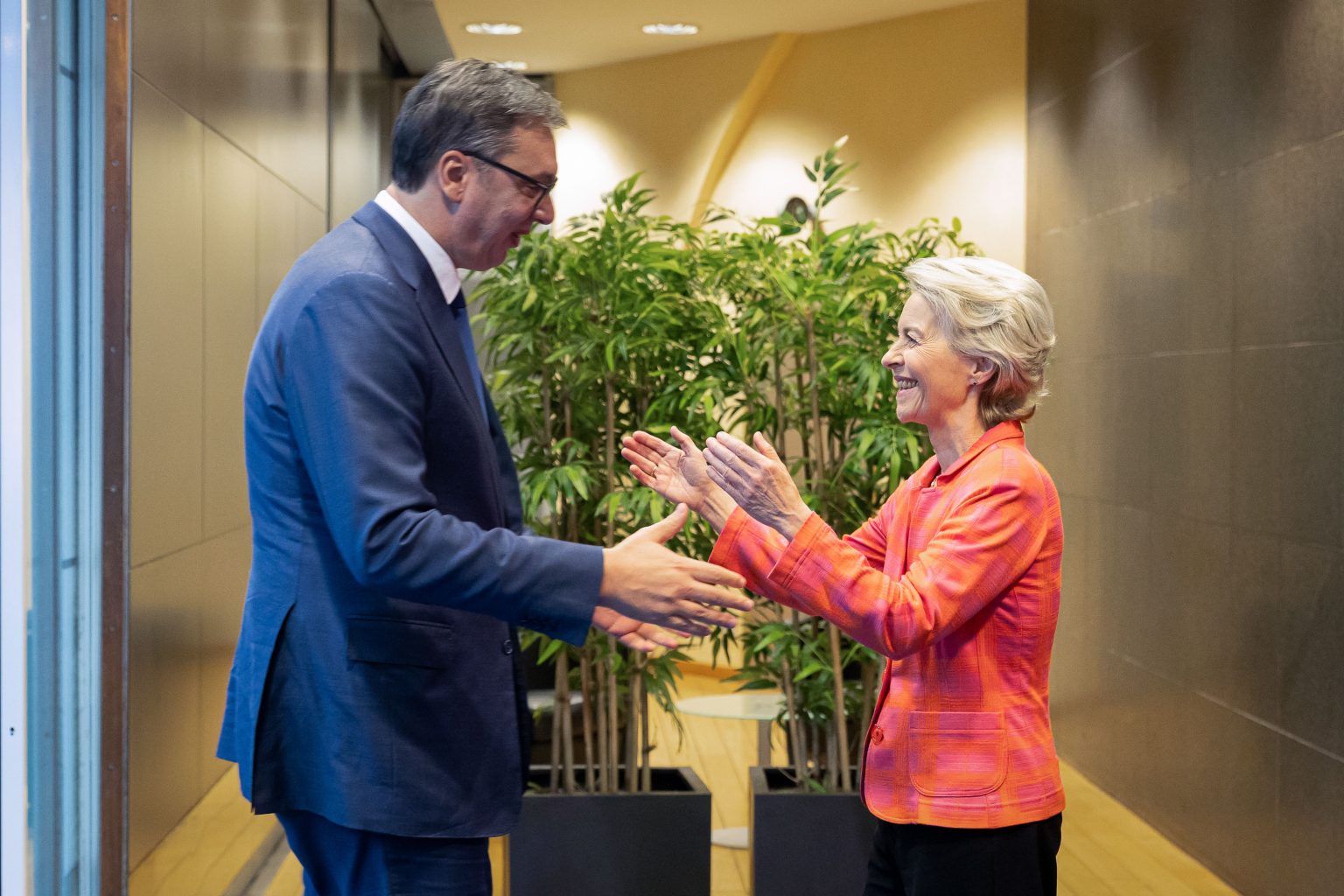
Serbia’s long journey toward European Union membership is facing renewed doubts in Brussels, as officials and experts question whether recent reform promises are enough to rebuild trust. Although the Serbian government continues to present EU integration as a key national goal, critics say progress remains inconsistent and often limited to formal or technical steps rather than deep political change.
Recent reports from Serbian media say the government has instructed state institutions to pay closer attention to EU legal standards when drafting laws. Officials are also expected to check whether new laws have been coordinated with the European Commission. While this may appear routine for EU candidate countries, Serbia has been in accession talks for more than 12 years, and such alignment is already expected as standard practice.
At the National Assembly, lawmakers recently adopted all 40 agenda items during a parliamentary session. These included several laws, agreements, and strategic documents. Among them were measures presented as aligned with European standards, including agreements linked to EU programmes and laws addressing human trafficking and victim protection. Government officials have described these steps as progress toward EU membership.
Despite these legislative moves, experts say the overall reform pace remains unclear. A new operational team was created in January to accelerate alignment with EU law across different sectors. The initiative was launched by the Serbian president and is focused mainly on technical reforms. However, critics argue that similar efforts in the past have not led to significant structural change.
The European Commission has also raised concerns about Serbia’s reform direction. Commissioner Marta Kos recently said the EU is reviewing whether Serbia meets conditions for financial support under the EU Growth Plan. She pointed to criticism of recent judicial reforms, which the Commission views as a step backward in rule of law standards. This has added pressure on Belgrade to demonstrate more consistent progress.
At the same time, political messaging from Serbia remains mixed. While officials continue to highlight EU membership as a priority, there is also growing anti-EU rhetoric in public debate. Some European lawmakers have been criticized by Serbian officials for raising concerns about rule of law and democratic standards in the country. This has contributed to a growing trust gap between Belgrade and Brussels.
Experts say the main issue is not the number of laws being passed, but the depth of political commitment to EU values. Analysts argue that real progress depends on stronger institutions, judicial independence, and protection of human rights. Without these changes, they say, formal legal alignment alone is not enough to move the accession process forward.
Research analyst Iliriana Gjoni from Carnegie Europe said there is no clear improvement in how Brussels views Serbia’s reform process. She noted that attention in the EU remains focused on countries seen as making faster progress, such as Montenegro and Albania. According to her, Serbia’s credibility is increasingly being questioned due to concerns about the rule of law and democratic standards.
Gjoni also said discussions in Brussels are now less focused on individual reforms and more on Serbia’s overall political direction. She explained that while some EU members support limited integration options, such as access to the Single Market, this does not reflect a clear path toward full membership. Instead, it suggests uncertainty about Serbia’s long-term commitment to EU values.
Another expert, Bojana Selaković of the National Convention on the EU, said Serbian authorities often focus on initiatives that do not match EU expectations. She argued that earlier opportunities for meaningful reform were missed. According to her, recent steps by the government have not produced lasting results and are often seen as short-term responses to external pressure.
Inside the EU, views on Serbia remain divided. Some member states continue to support closer engagement with Belgrade, while others push for stricter conditions tied to democratic reforms. Officials say there is no full consensus on how to move forward with enlargement in the Western Balkans.
At the same time, the European Commission continues to maintain dialogue with Serbian authorities. EU officials say communication must continue even when concerns exist, especially given ongoing regional instability and domestic political uncertainty in Serbia. However, they also stress that financial support and accession progress depend on real reforms.
Proposals from Serbian leaders suggesting alternative EU membership models without full rights have also drawn attention in Brussels. Experts say such ideas are not widely supported within the EU and are often seen as attempts to bypass standard accession requirements. EU officials continue to emphasize that membership is based on full alignment with European values and institutions.
Despite ongoing tensions, analysts say Serbia’s EU path is not completely closed. However, they warn that progress will depend on credible reforms and stronger political commitment. Without these changes, trust between Serbia and the European Union is likely to remain weak, slowing down the accession process further.

