

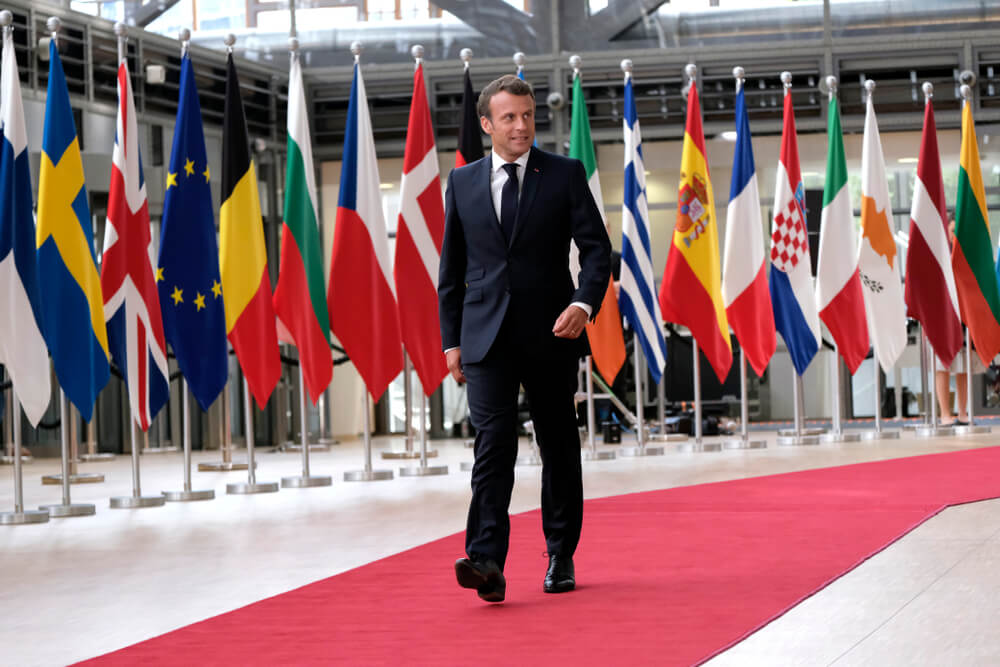
Renewed Focus on French Deterrence
President Emmanuel Macron is set to deliver a major speech outlining how France could contribute more directly to Europe’s nuclear deterrence, as security concerns mount across the continent. Speaking from the Île Longue peninsula — home to France’s four nuclear-powered ballistic missile submarines — Macron is expected to clarify that any broader French role would complement, not replace, the protection offered by the United States.
France and the United Kingdom remain Europe’s only nuclear-armed powers. While Macron first floated the idea in 2020 of involving European partners more closely in France’s deterrence framework, the proposal gained little traction at the time. Today, however, the geopolitical climate has shifted dramatically.
A Changing Security Landscape
Russia’s full-scale invasion of Ukraine and the return of Donald Trump to the White House have prompted renewed debate in European capitals about long-term security guarantees. Trump’s recent rhetoric, including threats toward fellow NATO member Denmark over Greenland, has deepened concerns — even as leaders publicly reaffirm confidence in NATO’s future.
Macron recently confirmed he has engaged in strategic discussions with German Chancellor Friedrich Merz and other EU leaders about how France’s nuclear doctrine could be better aligned with broader European defence needs. At the same time, Washington has signaled its intention to scale back some military deployments in Europe as it pivots toward the Indo-Pacific, though the scope of that shift remains unclear.
French officials argue the global environment is becoming more unstable, pointing to Russia’s development of hypersonic missiles, China’s expanding arsenal, and ongoing uncertainty surrounding Iran. They insist, however, that France’s approach is not about escalating tensions but about maintaining credible deterrence.
No Arms Race, But Greater Coordination
France follows a doctrine of “strict sufficiency,” maintaining only the number of warheads deemed necessary to deter aggression. Its arsenal of roughly 300 nuclear warheads is far smaller than those of the United States and Russia, each estimated to possess more than 3,500. Officials emphasize that France rejects the notion of nuclear war and is not seeking to enter an arms race.
Meanwhile, cooperation between France and the UK has deepened. Under the Northwood Declaration signed last summer, the two countries established a Nuclear Steering Group to strengthen coordination and participate in each other’s exercises. NATO Secretary General Mark Rutte and EU Defence Commissioner Andrius Kubilius have both cautioned that replacing the US nuclear umbrella would be costly and time-consuming.
Macron’s speech is expected to clarify how France envisions its deterrent contributing to Europe’s security — without undermining NATO — at a time when strategic uncertainty is reshaping the continent’s defence debate.

