

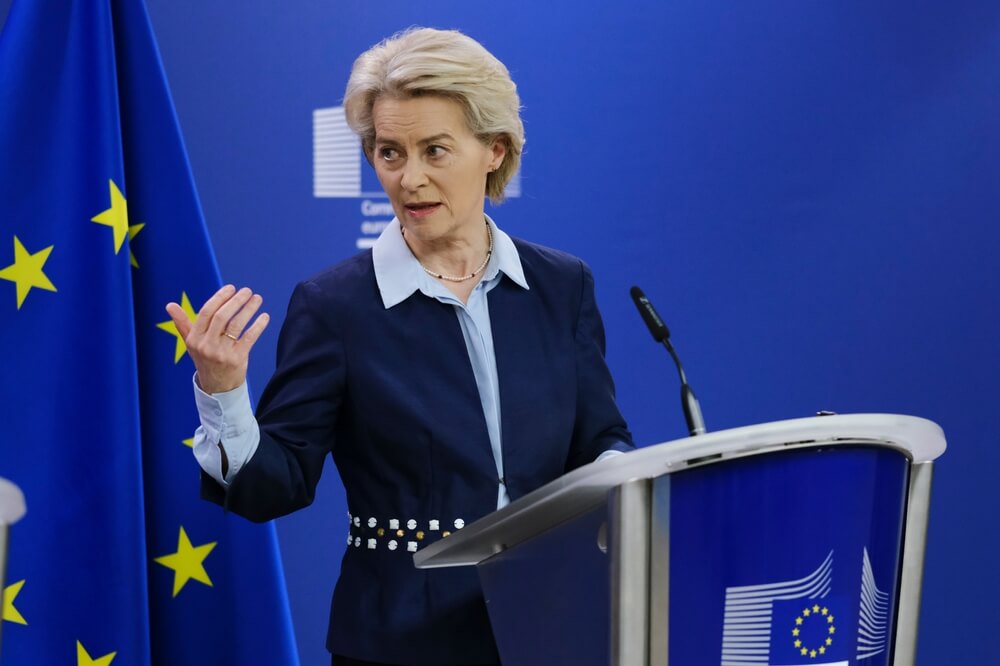
Brussels and capitals signal unity against pressure
European leaders have moved quickly to present a united front after US President Donald Trump threatened to slap fresh tariffs on several European countries unless Denmark agrees to sell Greenland. The warning has been widely described in Europe as an unprecedented escalation that risks sparking a new trade war and further straining transatlantic relations.
EU Commission President Ursula von der Leyen said Europe would stand firm, stressing that tariffs would only damage relations and push both sides toward a dangerous downward spiral. Leaders including France’s Emmanuel Macron and Germany’s Chancellor Friedrich Merz echoed that message, pledging a coordinated response to defend European sovereignty.
Tariff threat raises stakes over Greenland
Trump announced that goods from Denmark, Sweden, Norway, France, Germany, the Netherlands, Finland and the United Kingdom would face an extra 10% tariff from February 1, with the possibility of rising to 25% by June. He said the measures would remain in place until an agreement was reached for the “complete and total purchase” of Greenland, a semi-autonomous Danish territory.
The move followed a joint European mission to Greenland, aimed at strengthening cooperation and security in the Arctic. Danish officials pushed back strongly against claims that the territory was vulnerable, noting that intelligence reports show no Chinese naval presence there for years. Copenhagen said the European mission was meant to support stability, not provoke confrontation.
Calls grow for Europe to hit back
The latest dispute has intensified debate within the EU over whether it should abandon its cautious approach toward Trump. Lawmakers and senior figures are now urging Brussels to consider deploying its so-called anti-coercion instrument, a powerful trade tool that allows the EU to restrict market access and public procurement for countries accused of economic blackmail.
French President Macron warned that Europe would not be intimidated, while Swedish Prime Minister Ulf Kristersson said the EU would not allow itself to be blackmailed. In the European Parliament, senior figures called for freezing parts of the recent EU-US trade deal, arguing that a clear line has been crossed and that Europe must now be prepared to respond forcefully if the tariff threats are confirmed.

