

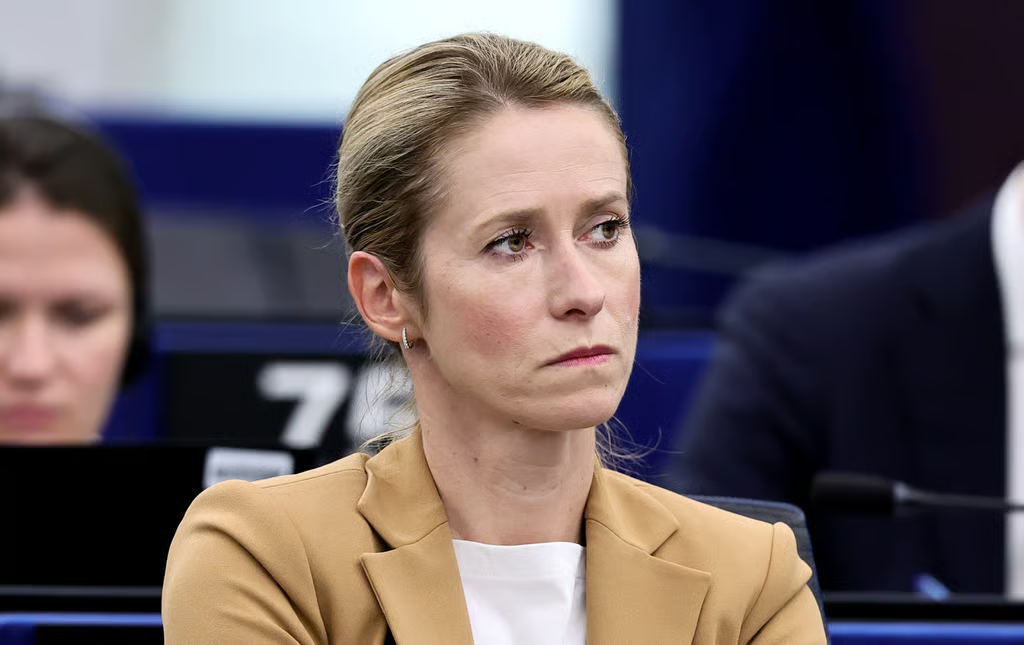
The European Union is ready to take strong measures against Israel, including suspending trade and halting joint research programs, but disagreements among member states are slowing action, according to the EU’s foreign policy chief.
Kaja Kallas told the European Parliament on Tuesday that the EU has clear options to pressure Israel, yet national governments remain divided. “Our options for more action are clear and remain on the table, but member states disagree on how to get the Israeli government to change course,” she said. “We cannot move as a Union until member states share the same view on what to do.”
The EU is deadlocked over sanctions after Israel’s ongoing military operations in Gaza. While Spain and Belgium have already imposed or pushed for tougher measures, countries such as Germany and Hungary have been hesitant to take strong action.
Kallas outlined a list of potential EU measures designed to influence Israel’s policies. These include suspending trade ties and halting Israel’s participation in the Horizon research and innovation fund. “There is no unity on what should come next,” Kallas said.
Despite the tensions, Kallas highlighted some progress in humanitarian aid. Between July 10 and September 1, 2,904 aid trucks entered Gaza, compared with no trucks entering from March to July. She emphasized that dialogue remains critical. “I believe we must continue diplomatic efforts with Israel because we cannot get anywhere if we do not talk,” she said.
The EU chief has repeatedly criticized Israel for blocking aid to civilians in Gaza. She accused the Israeli government of undermining decades of established humanitarian principles.
In June, Kallas defended the EU’s cautious approach after some lawmakers accused Brussels of inaction. She explained that any stronger measures require unanimous agreement among all EU member states, which has slowed decision-making.
The conflict in Gaza has caused a significant humanitarian crisis. Tens of thousands of Palestinians have been killed by Israeli airstrikes and shootings, following an attack by Hamas militants that killed about 1,200 people in Israel, mostly civilians.
Recent developments indicate that the situation in Gaza remains dire. Israeli authorities have instructed residents of Gaza City to evacuate to southern areas they described as humanitarian zones. This comes as the Israel Defense Forces prepare for operations to take over Gaza City.
Kallas’ statements underline the EU’s struggle to present a unified response. The bloc’s foreign policy apparatus has options ready, but political divisions among member states continue to block rapid action. Analysts say this split highlights the challenges the EU faces in balancing diplomatic pressure with the need for consensus on international crises.
The situation also raises questions about the EU’s role in future conflict resolution. While some nations push for strong sanctions, others advocate continued dialogue and humanitarian support. Kallas’ remarks suggest that without unity, the EU may struggle to influence Israel’s actions or prevent further civilian suffering in Gaza.

