

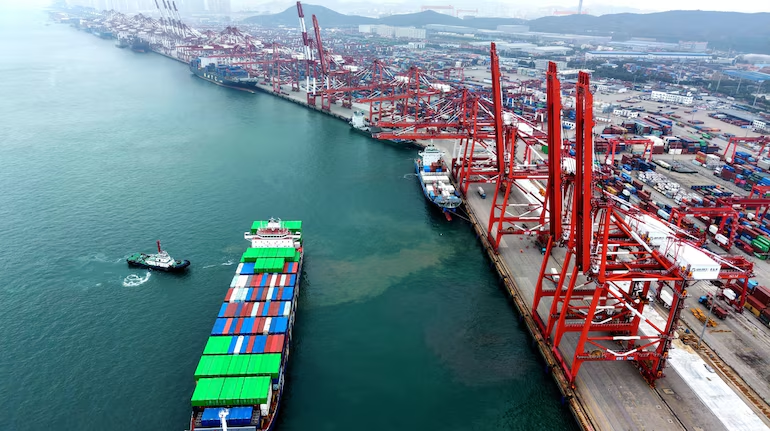
China’s export sector has shown surprising strength, surpassing market expectations and signaling resilience in global trade despite ongoing tensions. Recent data reveal that Chinese exports continue to expand at a pace faster than analysts had predicted.
Industry experts say the growth highlights China’s ability to adapt to changing global market conditions. Companies across multiple sectors, including electronics, machinery, and textiles, contributed to the robust export figures. Analysts note that this growth may help stabilize global supply chains affected by geopolitical challenges.
Trade tensions between China and other major economies, particularly the United States and the European Union, have created uncertainty for exporters. Despite these challenges, China’s export figures indicate strong demand for its goods worldwide. The increase reflects both strategic trade policies and efforts by Chinese manufacturers to diversify markets and improve efficiency.
Government officials point to policy measures that support exporters, including tax incentives, improved logistics, and streamlined customs procedures. These initiatives are designed to reduce operational costs for businesses and enhance their competitiveness in international markets. According to officials, these efforts have played a key role in sustaining export momentum.
Economists highlight that China’s export growth is also a sign of resilience in global trade. Rising demand from regions recovering from economic slowdowns, including Southeast Asia and parts of Europe, has boosted shipments of Chinese goods. Furthermore, innovation in high-tech sectors and increased production capacity in certain industries have helped maintain export volumes.
The export growth comes amid broader efforts to stabilize the Chinese economy. While domestic consumption remains a crucial driver, international trade continues to provide a vital source of revenue and employment. By maintaining strong export performance, China can balance economic growth while navigating complex trade relationships.
Some analysts caution that while the short-term growth is encouraging, long-term stability will depend on continued cooperation with trade partners and efforts to address potential supply chain disruptions. They also note that monitoring global demand patterns is critical to sustaining consistent growth in exports.
For businesses involved in global trade, China’s export performance offers both opportunities and challenges. Companies seeking to source products or expand their markets can benefit from reliable supply from China, while also needing to navigate regulatory and logistical complexities. Strong export figures can encourage investment in new technologies and production methods, reinforcing China’s position as a leading exporter.
Data released by trade authorities show that shipments of manufactured goods, electronics, and consumer products have all contributed to overall growth. Exports to key markets, including the United States, the European Union, and Southeast Asia, saw notable increases, demonstrating the diverse demand for Chinese products. Analysts suggest that the continued expansion of e-commerce platforms and digital trade channels has further supported export growth.
Policy experts note that maintaining balanced trade relations is essential. While growth is positive, countries importing Chinese goods are closely monitoring market conditions and regulatory compliance. Diplomatic engagement, transparent trade practices, and adherence to international standards are key factors influencing the sustainability of export growth.
In conclusion, China’s export growth exceeding expectations reflects both strategic planning and the resilience of the nation’s manufacturing and trade sectors. Despite ongoing global trade tensions, the performance indicates that Chinese exporters are capable of meeting international demand and adapting to evolving market conditions.
The recent data provide optimism for global markets, suggesting that international trade can continue to function effectively even in challenging geopolitical contexts. For businesses, investors, and policymakers, the growth in China’s exports underscores the importance of monitoring global trade dynamics, investing in innovation, and fostering partnerships that support long-term economic stability.
China’s ability to sustain export growth despite trade tensions highlights its position as a key player in global commerce. Moving forward, continued focus on efficiency, innovation, and international cooperation will be crucial to maintaining this positive trajectory in exports and ensuring the stability of the global supply chain.

