

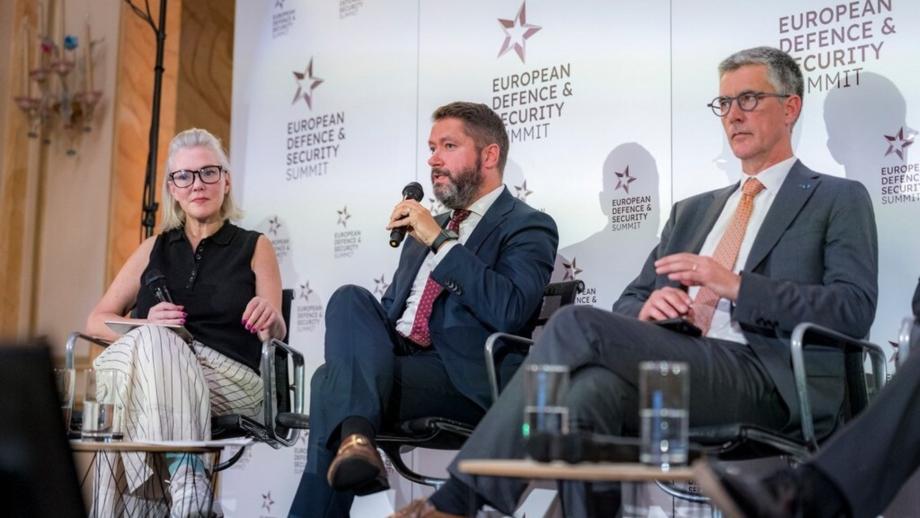
The European Defence Initiative took center stage in Brussels as security experts, policymakers, military leaders, and industry representatives met to discuss the future of Europe’s defence capabilities. The meetings focused on turning political commitments into practical action while strengthening military readiness and expanding Europe’s defence industry.
The three-day program took place from June 22 to June 24, 2026, bringing together key voices from across the European defence community. The discussions highlighted the need for stronger cooperation, improved industrial capacity, and better planning as Europe responds to changing security challenges.
The European Defence Initiative continues to provide research and policy recommendations that support decision-makers across Europe. The project aims to help governments and institutions develop stronger defence strategies based on evidence and practical solutions.
During the Brussels meetings, experts presented findings from several major defence studies that examined Europe’s ability to increase defence production and improve military preparedness. The research focused on building stronger supply chains, expanding industrial capacity, and ensuring armed forces have the equipment needed for future operations.
One of the main reports reviewed Europe’s defence industrial expansion and explored whether current manufacturing capacity can meet growing security demands. Experts discussed the need for faster production, stronger industrial resilience, and better coordination between governments and defence companies.
The program included presentations at the European Defence Agency and a policy discussion at the European Parliament. Participants examined how Europe can move from defence planning to real implementation while improving cooperation between public institutions, military organizations, and private industry.
Military readiness remained one of the main topics throughout the discussions. Experts emphasized that increasing defence spending alone will not be enough unless countries can also improve production, logistics, training, and operational planning. Participants agreed that practical implementation is essential for strengthening European security.
The conversations also focused on Europe’s defence supply chains. Speakers noted that reliable manufacturing networks and stable access to critical equipment are important for maintaining long-term security. Stronger supply chains can help reduce delays and improve the availability of military equipment during periods of increased demand.
Another major topic was air and missile defence. Experts said Europe must not only purchase modern defence systems but also ensure they work together effectively. Greater interoperability between national defence systems was described as a key requirement for improving collective security.
Security specialists explained that many NATO members already operate compatible defence equipment. However, these systems are not always fully connected during real operations. Better integration could improve communication, coordination, and response times across allied forces.
Experts encouraged governments to include interoperability standards at the beginning of future defence procurement programs instead of adding them later. This approach could improve efficiency while reducing future technical challenges. Existing integrated command systems were highlighted as useful examples for future cooperation across Europe.
The discussions also explored the security situation on Europe’s eastern flank. Research presented during the event examined military readiness, regional defence planning, and future capability requirements. Participants agreed that continued cooperation between European partners remains essential for maintaining stability and responding to evolving security risks.
The European Defence Initiative continues to serve as a platform that connects independent research with high-level policy discussions. By bringing together experts, government officials, military leaders, and industry representatives, the initiative supports informed decision-making across the European defence sector.
As Europe continues to strengthen its defence capabilities, policymakers are placing greater attention on industrial growth, military readiness, and closer cooperation among partner nations. The Brussels meetings demonstrated the growing importance of evidence-based planning in shaping future defence policies. Through continued research and dialogue, the European Defence Initiative aims to help build a stronger, more resilient, and better-prepared European security framework for the years ahead.

