

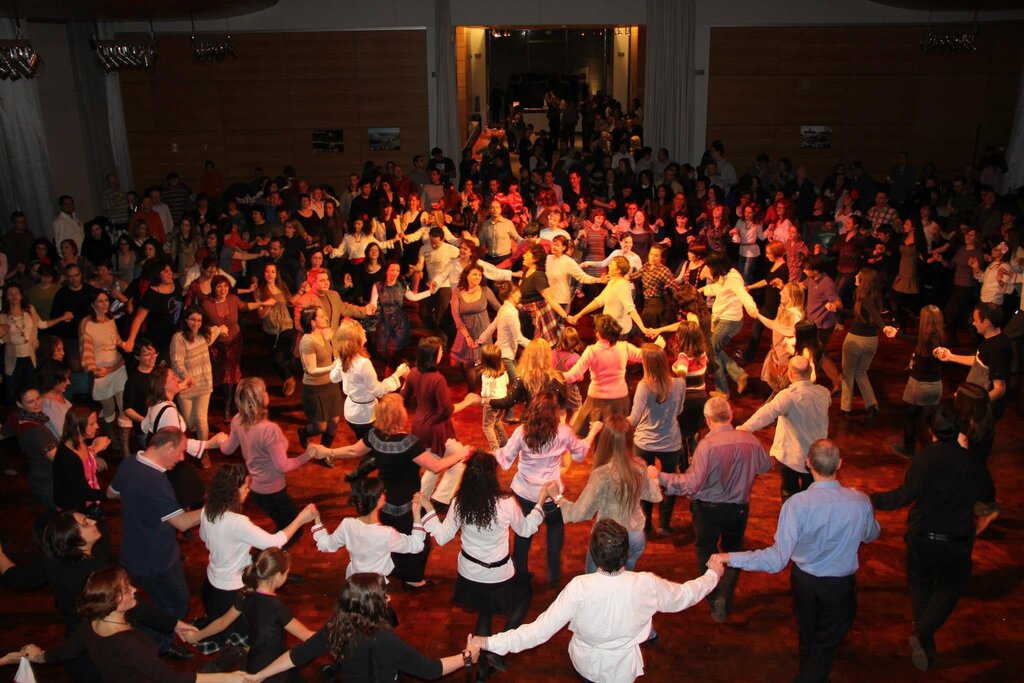
Bulgarians living in Brussels and across Europe gathered once again for the 38th edition of the Big Horo, a traditional folk dance event that has become a cultural highlight for the Bulgarian diaspora. The celebration brought together participants from Belgium, France, the Netherlands, and Germany for an evening of music, dance, and shared heritage.
The event, known as the Big Horo, is organised by Bulgarian community groups in Brussels and has grown into a regular cultural meeting point for people who want to stay connected to their roots. It also attracts international participants who enjoy Bulgarian folk dance and music.
Despite temperatures reaching around 33°C, the atmosphere inside the packed hall remained lively and energetic. Participants spent more than three hours performing horo dances from different regions of Bulgaria, showcasing the diversity of the country’s folk traditions.
The gathering included both experienced dancers and beginners, many of whom practice regularly in folk dance clubs across Europe. A highlight of the evening was a flash mob performance of the Thracian dance “Za Edna Karpa”, presented by the Na Horoto v Bruksel group, which had previously performed it at a folklore festival in Munich.
Participants described the event as a powerful emotional experience that strengthens community ties. Many said the Big Horo allows them to reconnect with their culture and feel a sense of belonging, especially while living abroad.
One participant explained that the event brings together families and friends who meet twice a year before the summer holiday season. Dance groups travel from cities such as Paris, Eindhoven, and various German locations to take part in the celebration. Organisers say the event continues to grow in popularity each year.
Another attendee said Bulgarian folk dance helps younger generations understand their cultural identity. Several parents brought their children to the event so they could experience traditional music and dance firsthand and develop a connection to their heritage.
The Big Horo is organised by Maria Tsvetkova, who also leads the Na Horoto v Bruksel folk dance club. She said the gathering acts as both a celebration and an informal showcase of what participants have learned throughout the year.
Tsvetkova noted that the event is especially meaningful for beginners, as it gives them a chance to perform in front of a large audience. She said interest in Bulgarian folk culture remains strong among both adults and children in Brussels, even during extreme summer heat.
Special guests this year included a children’s Bulgarian folk dance group from Waregem in Belgium, led by Gergana Kitancheva. The group, made up of children aged five to twelve, performed at the Big Horo for the first time after months of rehearsals.
Kitancheva said the goal of her teaching is to make Bulgarian folklore enjoyable and accessible to children born abroad. She explained that many of her students are growing up in Belgium and are learning Bulgarian language and culture through songs, dances, and storytelling rather than formal schooling alone.
She added that participation in cultural events like the Big Horo helps children build pride in their heritage and strengthens family involvement in cultural preservation. Some children in her group are even able to read and write in Bulgarian, which she said is a major achievement for families living abroad.
Alongside dance performances, the event also featured a Bulgarian language book exchange initiative called “Read It and Pass It On”. The project encourages participants to share books they have already read and recommend them to others in the community.
The initiative is managed by Sibila Stoyanova, who said the goal is to build a small community library through personal exchanges. She explained that readers are encouraged to share feedback and recommendations, helping to create a stronger cultural and literary connection among Bulgarians in Brussels.
Organisers say the Big Horo continues to serve as an important cultural bridge for Bulgarians living abroad. It not only preserves traditional dance and music but also strengthens community ties across generations and countries.
As the event concluded, participants left with a renewed sense of connection to their homeland, marking the start of the summer season with rhythm, tradition, and shared identity.

