

A week of high-level diplomacy across Europe has highlighted shifting global alliances, renewed coordination on Ukraine, and growing debate inside the European Union over how to manage relations with both the United States and Russia.
From the calm setting of Évian-les-Bains in France to tense meetings in Brussels, European leaders navigated a series of critical discussions involving the Group of Seven (G7), Ukraine strategy, and backchannel communication with Moscow. The week has been described by officials as one of the most intense diplomatic periods of the year.
At the centre of the G7 summit held in Évian was French President Emmanuel Macron, who hosted leaders in what many officials called a highly coordinated and carefully managed diplomatic effort. The summit produced a joint declaration supporting Ukraine and reaffirming Western unity on the ongoing conflict with Russia.
The meeting came after a turbulent previous G7 summit in Canada, where divisions among leaders over Russia policy and Middle East tensions led to limited progress. In contrast, this year’s gathering was marked by stronger alignment between the United States and European partners.
European officials said there was a noticeable convergence of views on Ukraine, particularly on the assessment that Russia is currently unwilling to engage in meaningful peace negotiations. This position has strengthened support for continued economic and military assistance to Kyiv.
Diplomats also pointed to what they described as improved coordination between the United States and European allies. Informal discussions suggested that both sides now share a similar long-term assessment of the conflict, even if tactical approaches differ.
A key highlight of the Évian summit was a high-profile dinner hosted at Versailles, which became a symbolic moment in the week’s diplomacy. The event was seen by European officials as part of Macron’s broader effort to maintain engagement with US leadership while reinforcing Europe’s diplomatic relevance.
Behind the scenes, officials described complex negotiations that also touched on energy stability and regional security concerns. Some discussions focused on easing global market pressures while maintaining a firm stance on Ukraine.
Attention also turned to internal European Union coordination, particularly after reports that a senior EU official’s team had made informal contact with Russian representatives. The move sparked debate in Brussels over how diplomatic channels with Moscow should be managed.
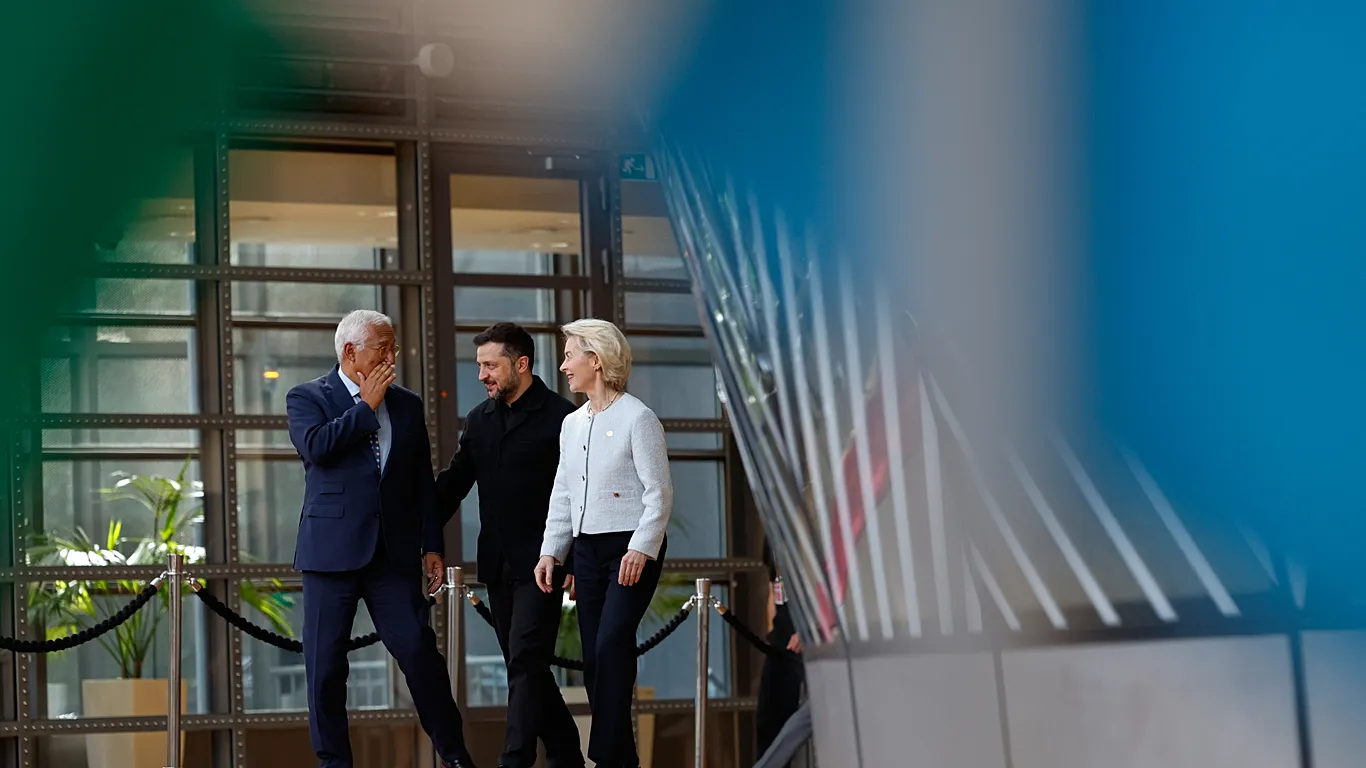
European Council President António Costa’s approach to diplomatic communication with Russia has drawn both support and criticism. Some officials argue that maintaining limited contact is necessary to ensure Europe is not excluded from future peace discussions.
Others remain cautious, pointing to the EU’s previous policy of isolating Moscow following the full-scale invasion of Ukraine. That strategy included sanctions, travel bans, and extensive financial and military support for Ukraine.
However, changing geopolitical conditions have reopened discussions about whether limited engagement could play a role in future negotiations. Analysts note that shifts in US foreign policy under returning leadership, along with evolving battlefield dynamics, are influencing European calculations.
Ukrainian President Volodymyr Zelenskyy has also been actively involved in these discussions, urging allies to maintain pressure on Russia while exploring all diplomatic options that could test Moscow’s willingness to negotiate.
European Commission President Ursula von der Leyen has echoed the need for coordinated strategy, emphasizing that any future engagement with Russia must remain closely aligned with Ukraine’s position and broader EU consensus.
The debate has exposed differing views within the EU over who should lead potential future talks with Russia, with questions over institutional roles between the European Council, the European Commission, and member state coalitions.
The so-called Coalition of the Willing, led by countries including France, Germany, and the United Kingdom, continues to play an informal but influential role in shaping European security discussions.
As the week concluded in Brussels, officials acknowledged that while no formal shift in policy has occurred, the discussions reflect a growing recognition that Europe may eventually need structured communication channels with Russia.
Despite disagreements over timing and approach, European leaders broadly agree on the importance of maintaining unity while adapting to a rapidly changing global security environment.
The week from Évian to Brussels has underscored both the complexity and urgency of European diplomacy as the war in Ukraine continues to shape international relations and redefine transatlantic cooperation.

